Everything You Need to Know About Techo International Airport
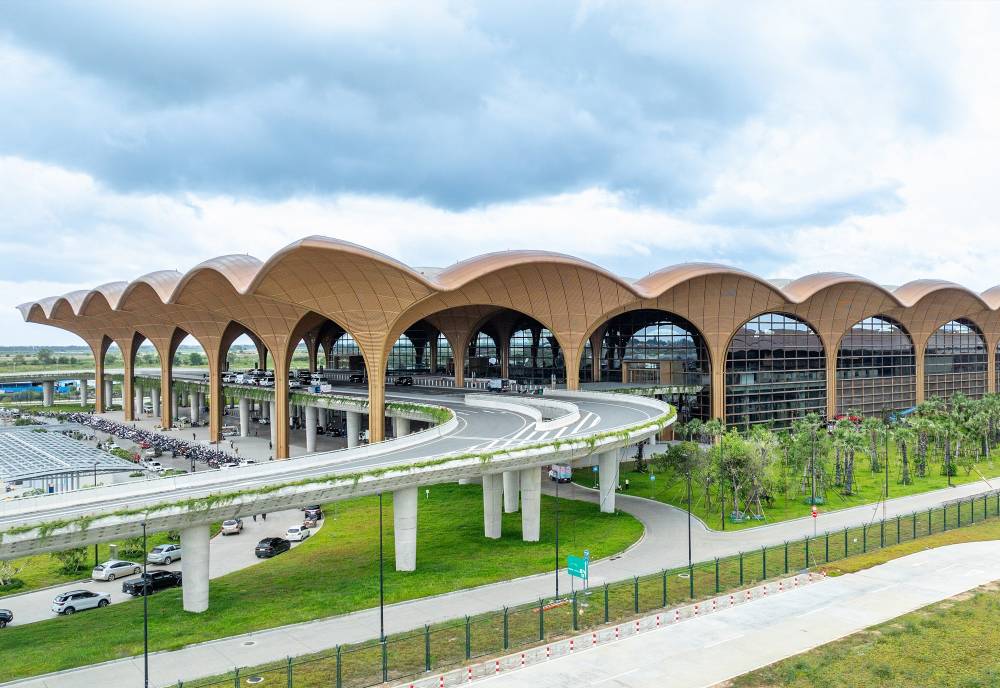
Located approximately 20 kilometers south of the capital, the newly inaugurated Techo International Airport (KTI) is a world-class 4F-class facility designed to transform Cambodia into a major regional aviation hub with an initial capacity of 13 million passengers annually.
Author: Seng Mengheng
Date: 20 October 2025
Source: Kiripost
Cambodia officially inaugurated Techo International Airport (KTI) on October 20, 2025, marking a major milestone in Cambodia’s aviation and infrastructure development.
The airport serves as a symbol of the Kingdom’s progress under peace and stability, and as a key driver for economic growth. The new facility is expected to strengthen the country’s aviation, tourism, investment, transport and logistics sectors at both national and international levels.
The inauguration ceremony, expected to be attended by around 1,500 participants, is another new achievement in contributing to the development of airport infrastructure and connecting flights to the wider world.
The airport, which replaces Phnom Penh International Airport, began flights for both domestic and international passengers on September 9, 2025.
The first flight to the new airport was Air Cambodia’s K6 611, which landed on September 9, 2025, after flying in from Guangzhou, China. The Airbus A320 landed at 7.59am local time and was welcomed with a ceremonial water cannon ceremony.
Techo International Airport, a 4F class airport, including supporting infrastructure, has a total investment of $2.3 billion dollars and spans 2,600 hectares in Kandal Stung district, Kandal province and Bati district in Takeo province, approximately 26 kilometres from the centre of Phnom Penh.
According to the work programme, the airport took more than five years to construct, starting on January 7, 2020, and ending on July 31, 2025.
KTI’s infrastructure is in line with international standards, and can serve all types of aircraft for both regional and long-haul flights. The construction of this airport is divided into three phases:
(Sub-Header) Phase 1
This phase enables the airport to serve up to 15 million passengers a year. Major works include
· One 4,000-metre-long, 60-metre-wide runway
· Two parallel taxiways
· 75 aircraft parking stands (32 contact and 43 remote)
· A five-storey head house covering 174,296 square metres
· A right-wing passenger terminal with an area of 81,252 square metres
· Cargo handling capacity of 175,000 tonnes a year
(Sub-Header) Phase 2
Capacity will double to 30 million passengers per year. Additional works will include:
· A second runway, also 4,000 metres long and 60 metres wide
· Two more parallel taxiways
· A left-wing passenger terminal building
· 75 additional parking stands, bringing the total to 144 aircraft stands
· Increased cargo handling capacity of 527,000 tonnes a year
(Sub-Header) Phase 3
The third stage will expand capacity to 50 million passengers annually, including the construction of:
· A third runway.
· A new passenger terminal building in line with the needs and growth of air transport in Cambodia.
On July 31, 2025, the State Secretariat of Civil Aviation (SSCA) issued “Airport Certificate” No. APC 05-1 to the operator of KTI. This is an official legal document to certify and ensure that KTI has met the technical requirements in accordance with the safety, security and technical regulations in Cambodia.
Since its launch, KTI has recorded an average of 150,000 passengers arriving and departing per day and 130 flights, also arriving and departing a day. A total of 29 airlines currently operate at KTI, comprising 25 international carriers and four local airlines.
A new airport was first hinted at in 2016, when plans for the current airport expansion were halted. The project was officially announced in January 2018 and construction began in 2020.
In 2019, Cambodia’s government partnered with the Overseas Cambodian Investment Corporation to create Cambodia Airport Investment (CAIC). This joint venture was formed through SSCA to develop and manage the country’s new airport projects, with a total investment of $2.3 billion.
Under the agreement, the government granted CAIC full rights to fund, construct, manage and own the airport.
CAIC has appointed international partners, including VINCI Airports for airport operations, Lagardère Travel Retail for retail management and Newrest for food and beverage services.
Designed by the renowned British architecture firm Foster + Partners, the terminal combines modern design with Khmer-inspired elements, creating a sense of place that celebrates Cambodia’s identity while meeting international standards of functionality and sustainability.