Food Processing Sector Key to Cambodia’s Economic Growth
By modernizing its agricultural value chain, Cambodia is positioning the food processing sector as a critical engine for industrial diversification, high-value exports, and sustainable economic resilience.
Author: Mom Kunthea
Date: 1 September 2025
Source: Khmer Times
Much like the agriculture and garment sectors that generate millions of jobs, the food processing sector directly benefits a sizeable population. The Cambodian economy, which is traditionally dependent on agriculture, now stands at a turning point where the promotion of domestic processing industries could unlock new opportunities for growth and sustainability. By moving beyond the export of raw materials and investing in value-added production, the Kingdom can generate stronger economic returns, improve food security, and strengthen its position in regional and global markets. But developing the food and consumer goods processing sector is not merely an economic strategy; it is a social and developmental imperative. By modernising infrastructure, adopting new technologies, strengthening workforce skills, ensuring quality standards, and expanding markets, Cambodia can boost rural incomes, create jobs, and diversify its economy. The Royal Government has recently rolled out some concrete measures to establish ‘agro-industrial parks’ in several provinces. This shouldn’t be delayed any further.
Cambodia’s economic growth has long relied on agriculture and garments, yet a sector that largely remained untapped with huge potential is the food and consumer goods processing. By transforming raw agricultural products into higher-value items and producing essential consumer goods, this sector not only strengthens the economy but also improves the livelihoods of millions of Cambodians, particularly in rural areas.
With rising domestic demand, growing tourism, and expanding global markets, now is the time to strategically develop and promote this sector.
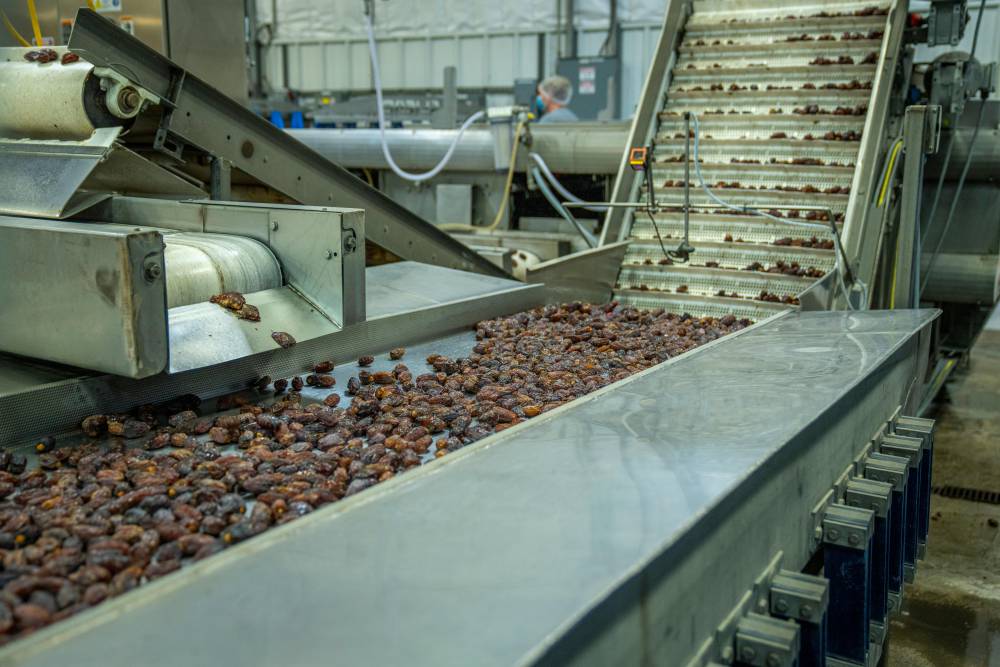
The processing sector acts as a crucial bridge between agriculture and manufacturing. Instead of exporting raw materials like rice, cassava, or fruits, Cambodia can produce packaged, ready-to-use, or value-added products such as rice noodles, canned fruits, sauces, snacks, and beverages. This approach increases the value of exports, enhances food security, and creates opportunities for local entrepreneurs.
Beyond economics, the sector directly benefits the population. Processing plants and associated logistics operations create jobs for workers, including women and youth, while fostering rural development. Processed and packaged food also improves year-round access to nutrition, reducing waste and ensuring affordability.
Domestic processing sector
The Cambodian economy, traditionally reliant on agriculture, stands at a turning point where the promotion of domestic processing industries could unlock new opportunities for growth and sustainability. By moving beyond the export of raw materials and investing in value-added production, Cambodia can generate stronger economic returns, improve food security, and strengthen its position in regional and global markets.
The growth of agro-processing industries would create thousands of jobs, particularly in rural areas where employment opportunities remain limited. Factories and small-scale processing facilities require workers for production, packaging, logistics, quality control, and marketing. Over time, this workforce develops specialised skills that raise productivity and improve competitiveness.
Speaking to Khmer Times, Keo Mom, CEO of Lyly Food Industry Co Ltd and President of the Chamber of Professional and Micro Enterprises of Cambodia (CPMEC), voiced strong support for the government’s efforts to promote the processing of local agricultural products into food, highlighting its potential to bring multiple benefits, particularly by boosting both household incomes and the national economy.
“I have observed that in the past, Cambodia has spent hundreds of millions of dollars every day importing agricultural products, vegetables, fruits, and processed foods from abroad. If we process these products domestically, that money will instead remain in the hands of Cambodian people, helping our economy to grow faster through various forms of processing,” she said.
Mom added that expanding the processing industry would encourage farmers to increase cultivation, thereby earning higher incomes, while also creating more job opportunities for people, enabling families to achieve better livelihoods.
Developing Cambodia’s food and consumer goods processing sector is not merely an economic strategy – it is a social and developmental imperative. By modernising infrastructure, adopting new technologies, strengthening workforce skills, ensuring quality standards, and expanding markets, Cambodia can boost rural incomes, create jobs, and diversify its economy.
Coordinated efforts from the government, private sector, and international partners are essential to unlock this sector’s full potential, ultimately improving the livelihoods of the Cambodian people while strengthening the nation’s economic foundation.
Expanding network
In mid-August, two private companies engaged in processing and exporting Cambodian agricultural products announced plans to expand their processing facilities.
The intention was revealed during a working meeting between Minister of Commerce Cham Nimul and delegations from Long Wo Agriculture (Cambodia) Co., Ltd. and Zhongbao (Cambodia) Food Co., Ltd.
According to the Ministry of Commerce (MoC), both companies requested further support for their expansion plans, as well as the signing of a Memorandum of Understanding (MoU) on the purchase and sale of mango seedlings for export to China, the United States, and European markets.
Nimul welcomed the initiative, affirming that the expansion of fruit and agricultural product processing facilities aligns with the government’s efforts to diversify export markets for Cambodian agricultural goods.
“Cooperation between the private sector and the Royal Government of Cambodia (RGC) is very important to strengthen the capacity of producers, processors, and exporters, in order to promote exports, expand Cambodia’s market share, and enhance the country’s reputation in the international market,” Nimul said.
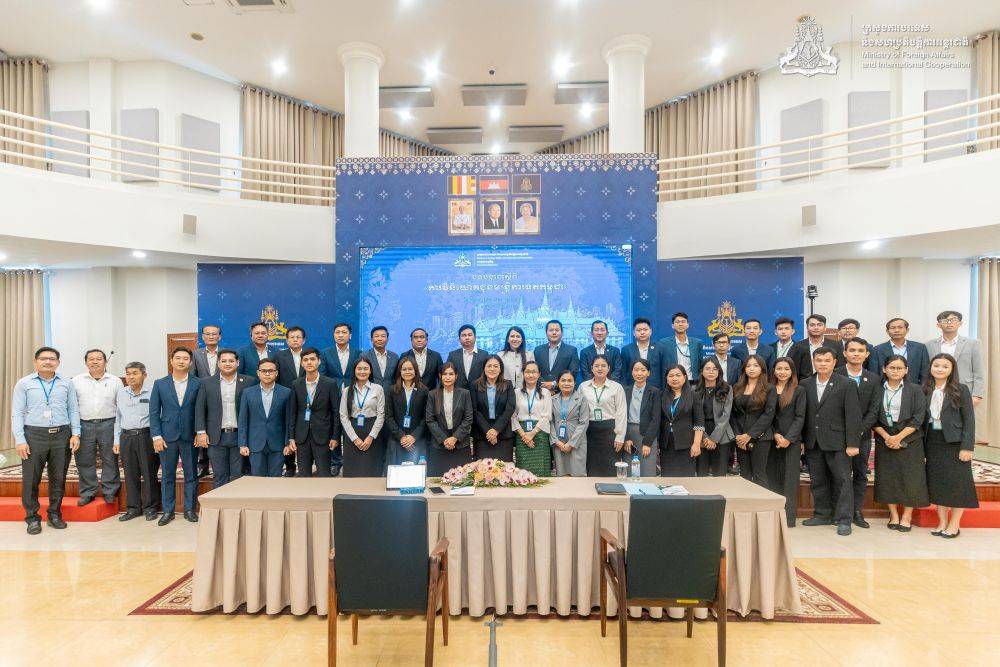
Earlier in August, the Ministry of Industry, Science, Technology and Innovation (MISTI) officially launched the Cambodia-Korea Food Processing TASK Centre, marking another milestone in advancing food processing and SME competitiveness in the country’s agro-food sector.
Funded through the Republic of Korea’s Official Development Assistance (ODA), the centre is equipped with cutting-edge facilities, including a pilot plant, a food quality and safety analysis unit, small- and medium-sized enterprises (SMEs) technical support services, and a promotion hall for showcasing Cambodian and Korean products.
The initiative aims to enhance value chains, improve compliance with international standards, and help local producers develop market-ready, export-quality food products.
Hem Vanndy, Minister of Industry, Science, Technology and Innovation, said the new centre represents a significant step forward in creating opportunities for local SMEs to improve the safety and quality standards of Cambodia’s food products.
“I want to call on the private sector, especially local food producers and manufacturers, to leverage the centre’s infrastructure and capability to strengthen their food processing innovation, enhance the value of local products and raw materials, and meet national and international standards,” said Vanndy.
The pilot plant of the centre is designed to help local SMEs prototype new food products using 83 modern processing machines capable of transforming raw materials – such as meat, vegetables, and grains – into noodles, snacks, beverages, and health foods of various kinds.
“This project goes beyond technical support – it builds infrastructure, trains professionals, and supports SMEs for practical industrialisation and market entry,” said Paik Hyun Dong, President of the Korea Food Research Institute (KFRI). “We hope the Cambodia-Korea Food Processing TASK Centre will become the cornerstone for the development of Cambodia’s food industry.”
He added that SMEs will also benefit from technical assistance, knowledge sharing, and tailored consulting services for the attainment of necessary certifications. In addition, the centre’s Promotion Hall will serve as a platform to showcase products, success stories, foster consumer trust, and promote collaboration among Cambodian and Korean food producers.
Branding Cambodian products
Lor Vichet, Vice-President of the Cambodia Chinese Commerce Association (CCCA), told Khmer Times that promoting agricultural and food processing offers significant benefits for Cambodia.
He stressed that promoting agricultural processing helps market Cambodian goods, strengthen quality, and build brands that gain recognition internationally. This, in turn, allows Cambodian producers to sell at better prices while earning the trust and confidence of consumers.
However, Vichet noted that developing the processing sector requires varying levels of capital depending on the type of product. Entrepreneurs and traders who wish to increase value addition need access to loans and must prepare clear business plans to secure financing at competitive interest rates. At the same time, they must carefully study both domestic demand and international market trends.
“If entrepreneurs do not conduct in-depth studies on market demand for processed products, it will inevitably lead to business losses,” he cautioned.
He added that if local traders expand processing capacity while maintaining consistent product quality, Cambodia could reduce imports of certain goods by replacing them with locally processed alternatives.
“The benefit for our country is that when we expand the production chain, we can create more local jobs and reduce migration,” Vichet stressed.
Future prospects
The Royal Government has introduced a range of measures to support the growth of the processing sector, including free trade agreements, trade facilitation policies, and investment incentives designed to improve competitiveness. Processing and agro-industrial development as essential for Cambodia’s ambition to diversify its economy and graduate from Least Developed Country (LDC) status by 2029.
As more companies expand their facilities and entrepreneurs embrace value addition, the processing industry is expected to play an increasingly central role in transforming Cambodia’s economic landscape – keeping wealth within the country, creating jobs, and building internationally recognised Cambodian brands.
At the first congress of the National Assembly-Senate on “Agriculture” in June, Prime Minister Hun Manet underscored the importance of promoting agricultural product processing by modernising the agro-industrial sector, encouraging investment, studying and establishing “agro-industrial parks” to cluster enterprises, stabilising supply, and continuing to provide concessional financing.
He also announced plans to implement an agro-industrial park development framework in three target provinces – Kampong Thom, Battambang, and Kampong Speu – to create a favourable environment for investment in processing agricultural products for export through additional special incentives.
In addition, he proposed a plan to establish a cashew processing park in Kampong Thom province to absorb raw cashew production, enhance value-added processing, create jobs, and boost exports.
“The Royal Government has been continuously introducing and promoting the implementation of policies, priority programmes, and key measures, including encouraging investment in the agricultural product processing industry, promoting the establishment of local agricultural fertiliser factories, adopting new technologies, and transforming individual production into modern agricultural communities,” the Premier added.
“These initiatives will enable Cambodia to avoid food shortages and agricultural price inflation, ensuring stability and security for the people.”
Last year, the Ministry of Agriculture, Forestry and Fisheries (MAFF) organised the first “Outstanding Cashew Nut Processors” competition, aimed at improving production quality, expanding market growth, and promoting modern cashew nut processing techniques, economic analysis, and competitiveness.
The ministry encouraged processors to develop clear processing plans, secure market contracts, seek partner support, and access loans to expand their businesses.
According to MAFF, cashew nut processing in Cambodia remains largely at the handicraft level. Therefore, it is essential to strengthen the capacity to compete with other countries in the future, particularly by scaling up processing to an industrial level.
Strengthening food security
Developing processing industries also strengthens Cambodia’s food security. Processed foods typically have a longer shelf life, which helps ensure supply during off-seasons or emergencies
At the same time, boosting domestic processing reduces dependency on imported processed foods, such as fruit juices, instant noodles, and packaged snacks. By producing these locally, Cambodia can keep more money within its economy and build consumer confidence in Cambodian-made products.
Chhort Bunthang, Deputy Director-General of the International Relations Institute of Cambodia under the Royal Academy of Cambodia, remarked that Cambodia, a country rich in natural resources and agricultural potential, is now facing a critical question: Should it continue to rely heavily on food imports from neighbouring countries, or shift its focus toward achieving greater self-sufficiency?
He added that importing food from neighbouring countries can bring benefits, but only if managed wisely. Cambodia should adopt a balanced approach – one that safeguards food security, protects the livelihoods of local farmers, and at the same time ensures safe, affordable, and reliable food supplies for its citizens.
“Over-reliance on imported food carries significant risks. It can weaken local agriculture by reducing demand for domestically produced goods. Cambodian farmers, most of whom are smallholders, are forced to compete with cheaper imported products. This affects rural livelihoods and slows development in sectors that generate substantial employment,” Bunthang explained.
During a visit to fish farms and processing facilities in Stoung district, Kampong Thom province last week, Vongsey Vissoth, Permanent Deputy Prime Minister and Minister in Charge of the Office of the Council of Ministers, said last week that the Royal Government has prioritised promoting and expanding value-added in the agriculture and agro-industry sectors, which are considered key drivers of growth.
He emphasised that these sectors not only contribute to diversifying Cambodia’s economic base but also play a vital role in improving people’s livelihoods.
Vissoth encouraged fish farmers, collectors, distributors, exporters, and processing industries to strengthen their capacity, enhance productivity and quality, and improve services to meet both market demands and international standards.
He urged greater cooperation within the sector to build a vibrant ecosystem and a stronger, higher value-added production chain – capable of competing with neighbouring countries in terms of both quantity and quality.
The domestic processing sector offers Cambodia more than just industrial diversification, it offers a pathway to sustainable development. By capturing more value from its agricultural output, creating jobs, strengthening food security, and reducing dependence on imports, Cambodia can build a stronger, more resilient economy.
In short, processing is not merely an economic activity; it is a strategic step toward transforming Cambodia from a raw material supplier into a value-added producer with global reach.